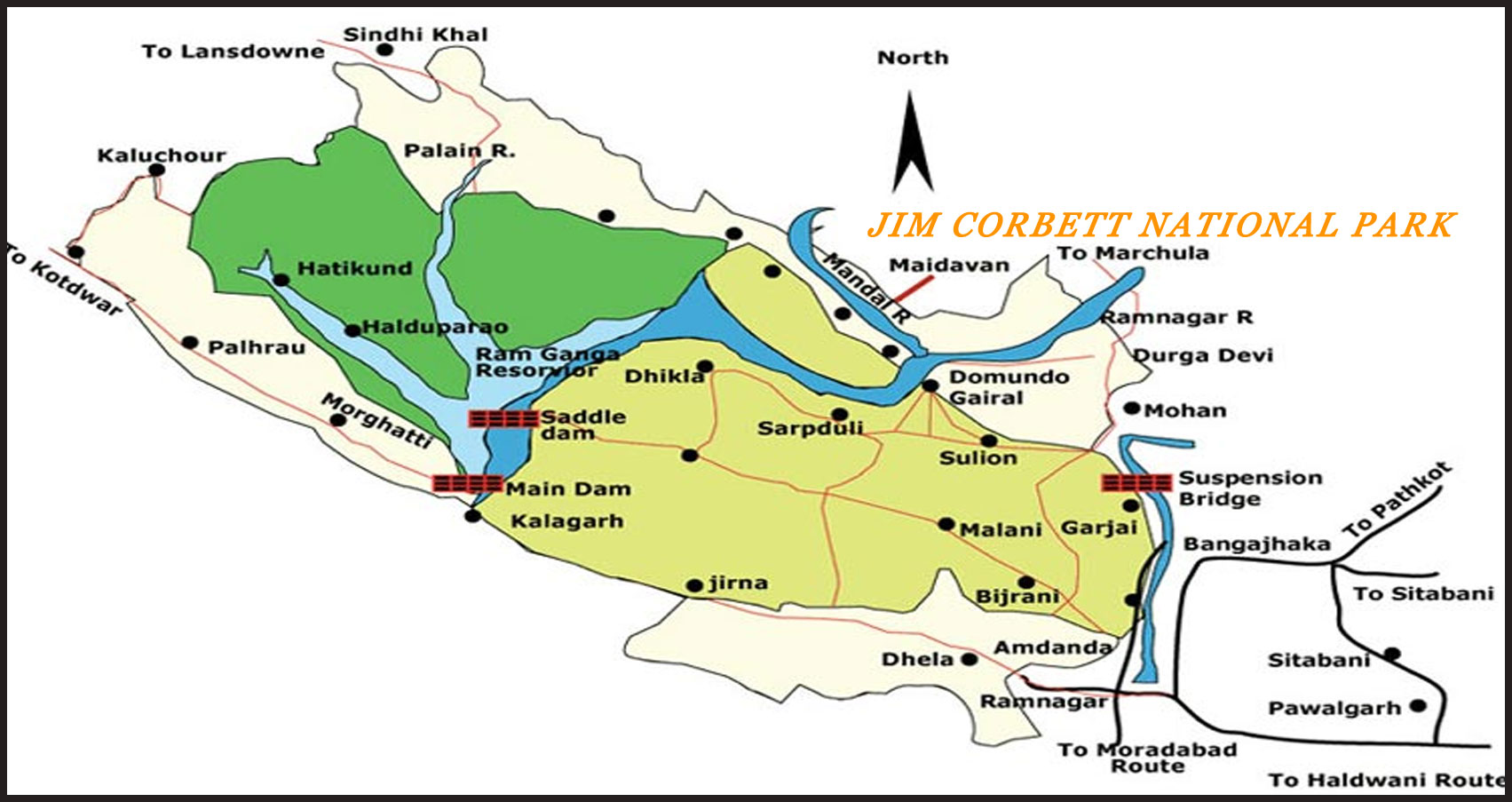
CORBETT NATIONAL PARK MAP
CORBETT MAP:
Jim Corbett National Park lies at the base of the Himalayan ranges, close to the scenic and much-visited hill station of Nainital. Geographically, the reserve is positioned between latitude 29°25′ N to 29°39′ N and longitude 78°44′ E to 79°07′ E. Spanning an area of 1,318.54 square kilometers, the park serves as a secure habitat for numerous tigers and is known for having the highest recorded population of tigers among India’s national parks.
Weather conditions play an important role for travelers. Thankfully, Corbett enjoys relatively moderate temperatures compared to many other wildlife sanctuaries. In the winter season, temperatures range from about 5°C to 30°C with occasional morning mist, while during summer the heat generally stays below 40°C, providing visitors with a more comfortable experience.
The reserve shelters an incredible diversity of life with 488 identified species of plants. Alongside its flora, the park is home to 586 varieties of birds, 33 kinds of reptiles, 7 species of amphibians, and 7 different fish species, making it one of the most biologically rich landscapes in the country.